

This article will take you through every key link in the one – stop procurement process, from requirement communication, purchase order placement, production follow – up, quality inspection, international logistics, customs clearance to final receipt and inspection of goods. It aims to help you build an efficient and controllable cross – border procurement system.
By combining the best domestic and international practices with real – world cases, you can accurately master how to ensure quality and timeliness while controlling costs, thus enhancing your procurement competitiveness.
There are also practical suggestions at the end of the article. Feel free to leave a comment in the comment section or contact us for more support.
1. Defining Requirements and Specifications:
First of all, you need to write a detailed requirement document, including elements such as product name, specification parameters, material requirements, target cost and estimated delivery time, to ensure that information is accurately conveyed.
For complex projects, the RFP (Request for Proposal) method can be adopted. Describe the requirements to multiple potential suppliers and collect their technical solutions and quotations for horizontal comparison.
2. Precise Communication and Feedback:
When communicating with suppliers, you should express key indicators in a clear and concise language and confirm that the other party understands correctly at each stage to avoid subsequent errors.
Use email templates or online collaboration tools (such as Slack, Microsoft Teams) to solidify communication records, which is convenient for traceability and also conducive to team collaboration.

2. Key Points in Purchase Order (PO) Preparation:
The purchase order is an important part of the contract annex. You need to clearly define core terms such as pricing, quantity, packaging requirements, payment terms (such as OA, letter of credit) and delivery time in the PO.
For large – value or first – cooperation projects, it is recommended to add liability for breach of contract clauses in the contract to prevent unilateral breach of contract by either party.
2. Contract Signing and Clause Optimization:
In terms of payment terms, OA (Open Account) offers high flexibility but comes with relatively high risks; letters of credit (L/C) provide strong security but also incur high costs.
You can flexibly combine OA, letters of credit or bills of exchange and other tools according to the project scale and your trust in the supplier to achieve a balance between funds and risks.

1. Confirmation of Production Plan:
After the contract is signed, you should request the production schedule immediately and agree on phased milestones with the supplier (such as sample confirmation, material arrival, trial production completion, etc.) to ensure that the project progresses as planned.
In case of cost or technical differences, the “make – or – buy” decision – making model can be used to re – evaluate whether core components need to be outsourced to a third party or processed in – house.
2. Progress Monitoring and On – site Inspection:
Regularly communicate with the supplier about the production progress and arrange on – site visits or entrust third – party factory inspections as needed to discover and adjust problems in a timely manner.
Off – site supervision can be carried out through methods such as taking pictures and video conferencing to improve the effect of visual management.

1. Small – batch Pre – inspection:
Before mass production, you should first conduct a small – batch pre – shipment inspection to ensure that key indicators such as dimensions, functions and appearance meet the standards and avoid overall rework.
2. Third – party Inspection:
For core components or sensitive industries (such as electronics, food, cosmetics), it is highly recommended to introduce third – party testing institutions (such as QIMA, BV, Intertek) to issue inspection certificates, which can enhance customer trust and customs clearance efficiency.

1. Selection of Transportation Modes and Routes:
You need to make an optimal choice among sea transportation, air transportation, road transportation and rail transportation based on delivery time requirements, cost budget and product characteristics (such as fragility, dangerous goods).
A suitable freight forwarder can strive for more favorable freight rates and provide full – process risk management for you. Be sure to examine their industry experience and network coverage when making a selection.
2. Operation Process of International Transportation:
- Less – than – Container Load (LCL) or Full – Container Load (FCL): Charged by volume or weight.
- Issuance of Bill of Lading: The freight forwarder handles the bill of lading for you as a document of title to the goods.
- Marine Shipment Tracking and Exception Handling: You can track the shipment number in real – time on the official website or platform. In case of port congestion or tight shipping space, timely coordination is required.
3. Customs Declaration and Clearance:
At the stage of customs declaration, you need to prepare materials such as commercial invoices, packing lists, contracts, and certificates of origin, and complete the electronic declaration in accordance with customs requirements.
China Customs also has clear regulations on the standardized forms for port clearance. Ensure that the names of ports are filled in accurately to avoid goods being detained or released late due to form format issues.
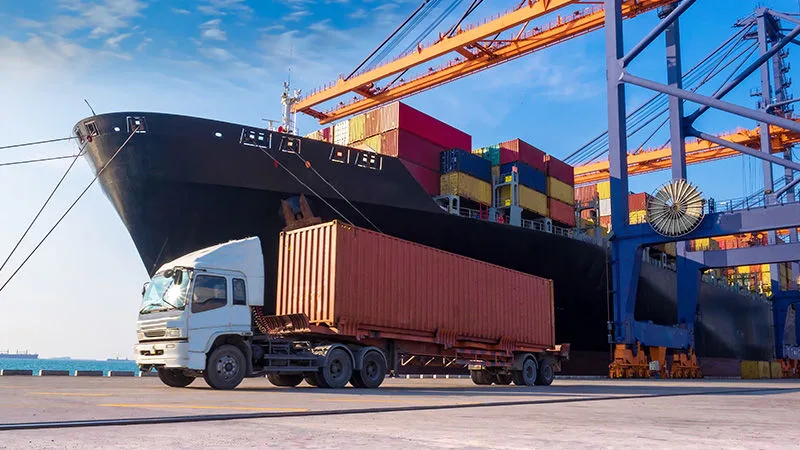
1. Key Points in Receipt and Inspection:
When the goods arrive at the destination, after you or the designated agent signs for receipt at the warehouse or terminal, appearance, quantity and random sampling inspections should be carried out in accordance with the contract. If shortages or damages are found, take pictures as evidence immediately and notify the supplier and the shipping agent to negotiate compensation.
2. Exception Handling and Claims:
In case of quality or quantity disputes, you should compare the inspection report with the inspection report at the time of shipment and initiate the claim process in accordance with the contract. Retaining complete inspection reports, photos and logistics documents is the key evidence for your rights protection.

Through the systematic management of the above – mentioned links, you can deeply understand the operation logic of one – stop procurement, minimize risks and improve delivery efficiency.
- Standardized Process: It is recommended to sort out and solidify the internal SOP for easy team implementation.
- Digital Tools: Introduce systems such as ERP and TMS to achieve real – time information sharing.
- Continuous Optimization: Regularly review supplier performance and process efficiency and continuously iterate and upgrade the procurement system.
Conclusion
Thank you again for reading. If you have any questions or want to learn more practical cases, please feel free to leave a message below or contact our procurement experts at any time!