
China occupies a very important position in global supply chains because of its strong competitiveness in manufacturing, productivity and cost advantages. Over the past few decades, China has evolved into the “factory of the world”, supplying the world with a wide range of products from consumer electronics to apparel and automotive parts. China’s abundant labor resources, increasingly sophisticated industrial infrastructure, and vast network of suppliers give it a significant advantage in mass production and rapid delivery.
China’s supply chain is not limited to high-volume manufacturing, but also includes a full range of services from raw material sourcing, processing and production to logistics and transportation. In many industrial sectors, Chinese manufacturing companies are able to provide high-quality products at lower costs and respond quickly to international market demand, becoming the core suppliers of many global brands. In addition, with the improvement of technological innovation, China is rapidly increasing its manufacturing capabilities in high-tech products (e.g., 5G, smart home devices, and electric vehicles), diversifying its role in the global supply chain.
As a result, more and more buyers are choosing to come to China to find suppliers to ensure the quality of their products while being able to visit Chinese companies on the ground. However, for buyers who have never been to China before, visiting China to find suppliers can be very challenging.
In this article, I will show you the 3 main ways to find quality suppliers by visiting China and what to look for when dealing with them.
What do you need to be aware of before coming to China?

Entry and Exit Restrictions
A valid passport and visa, usually a business, tourist or work visa, are required to enter China. Some health declarations and testing requirements may be adjusted in line with the policy after the epidemic, so it is best to check the latest entry policy before departure. Customs may ask you about your itinerary when entering the country, so be prepared to prepare relevant documents such as hotel booking forms and return air tickets for inspection. Therefore, it is best to check with the Chinese Embassy in your country before departure.
VPN
Access to some foreign websites (e.g. Google, Facebook, Instagram, etc.) may be restricted in China, so it is recommended to download and install a VPN in advance. make sure that the VPN can work properly in China, otherwise you may not be able to access commonly used foreign social platforms and services. In addition, it is recommended to download some local apps, such as WeChat and Alipay, for communication and payment, which are very convenient.There are both free and paid VPNs (e.g. ExpressVPN, NordVPN, Surfshark) that work pretty well in China.
Translation problems
Although young people in some big cities speak better English, many small places and daily communication are still dominated by Chinese. You can download translation apps, such as Google Translate or Baidu Translate, which support text, voice and real-time image translation. In addition, WeChat’s built-in photo translation function is also very useful, so you can solve the language barrier at your fingertips.
The right time to visit China
Choosing the right time to visit China can enhance the efficiency of travel and business arrangements. Generally speaking, the weather in spring and fall (March-May and September-November) is comfortable and suitable for travel. Try to avoid large holidays such as Chinese New Year and National Day, during which there are large crowds, airfares and hotel prices rise, and factories and companies are usually closed for vacation, which may affect visit arrangements and business communications.

1.Find suppliers at Chinese trade fairs
A wide range of industries and products are covered at China trade shows, and regardless of your size, attending trade shows is the most effective way to find Chinese suppliers offline.
Trade fairs are not only attended by manufacturers but also by traders, as well as wholesalers and distributors. Some of these exhibitors generate their products directly, while others can offer different combinations of products, often with low order quantities, at the lowest possible ex-factory prices.
Thousands of trade fairs are held in China every year, which are generally divided into comprehensive trade fairs for multiple industries and specialized trade fairs for specific industries.
Canton Fair (China Import and Export Fair)
Canton Fair is the oldest and largest comprehensive trade fair in China, known as “China’s No. 1 Fair”. Attracting buyers from more than 200 countries and regions around the world and covering almost all major industries, the Canton Fair is an important platform for foreign buyers to purchase Chinese goods. It covers almost all product categories, from household goods, electronic products to machinery and equipment.
| Phase | Categories | Main Exhibits | Times |
| First Phase | Electronics and home appliances, hardware tools, machinery and equipment, etc. | Electronic products, household appliances, lighting equipment, machinery, hardware, tools | April 15-19, October 15-19 each year |
| Second Phase | Consumer goods, gifts, home decorations | Home furnishings, gifts, decorations, tableware, gardening supplies | April 23-27, October 23-27 each year |
| Third Phase | Textile & Clothing, Footwear, Office Stationery, Medicine & Healthcare, etc. | Textiles, clothing, footwear, office stationery, bags, medical products | May 1-5, October 31-November 4 each year |
China International Import Expo (CIIE)
China International Import Expo (CIIE) is the world’s first import-themed national exhibition focusing on the entry of global goods into the Chinese market. The Chinese government attaches great importance to it, and it has attracted the participation of officials and enterprises from many countries, displaying products covering the fields of food, agriculture, medical equipment, consumer goods and so on. Through CIIE, foreign enterprises are able to directly connect with Chinese buyers and agents to accelerate their entry into the Chinese market.
| Year | Exhibition Time | Main Exhibit Categories |
| 2024 | November 5 – 10 | Food & Agricultural Products, Consumer Electronics & Home Appliances, Automobiles & Components, Medical Devices & Pharmaceuticals, Apparel & Lifestyle Products, Service & Trade, etc. |
| 2025 | November 5 – 10 | Food & Agricultural Products, Consumer Electronics & Home Appliances, Automobiles & Components, Medical Devices & Pharmaceuticals, Apparel & Lifestyle Goods, Trade in Services, etc. |
Held annually, usually in November, CIIE covers a wide range of imported goods categories and offers global companies the opportunity to showcase and enter the Chinese market.
China International Medical Equipment Fair (CMEF)
CMEF is one of the largest and most influential medical device exhibitions in Asia. Covering a wide range of medical equipment, devices and technologies, it has become an important platform for international medical equipment manufacturers to enter the Chinese and Asian markets.
| Year | Time | Location | Main Exhibit Categories |
| 2024 | April 8 – 11 | Shanghai | Medical devices, medical consumables, laboratory equipment, information technology, nursing products, etc. |
| 2024 | Late October (exact date to be confirmed) | Shenzhen | Medical devices, medical consumables, laboratory equipment, information technology, nursing products, etc. |
| 2025 | Late April (specific dates to be determined) | Shanghai | Medical devices, medical supplies, laboratory equipment, information technology, nursing products, etc. |
| 2025 | Late October (dates to be announced) | Shenzhen | Medical devices, medical consumables, laboratory equipment, information technology, nursing products, etc. |
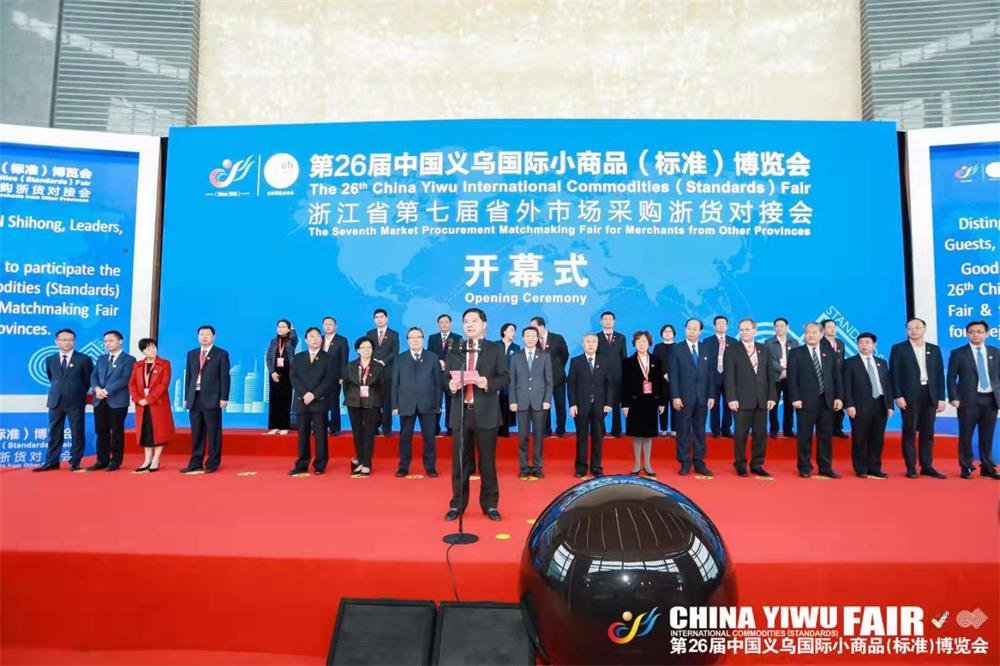
Yiwu International Commodity Fair
Yiwu International Commodity Fair is one of the largest small commodity fairs in the world, and Yiwu is known as the “capital of small commodities”. Attracting a large number of foreign small and medium-sized buyers, Yiwu International Commodity Fair is an important choice for foreign buyers to purchase small commodities and consumer goods. The exhibits cover a wide range of small commodities, including stationery, jewelry, daily necessities, etc. It is an important sourcing ground for global wholesalers and retailers.
| Year | Exhibition Time | Exhibition Venue | Main Exhibits |
| 2024 | October 21 – 25 | Yiwu | Commodities,daily necessities, accessories, stationery, household goods, handicrafts, etc. |
| 2025 | April (exact date to be confirmed) | Yiwu | Commodities, daily necessities, jewelry, stationery, household goods, handicrafts, etc. |
| 2025 | October (specific date to be determined) | Yiwu | Commodities, daily necessities, jewelry, stationery, household goods, handicrafts, etc. |
The Yiwu International Commodity Fair is held twice a year, in spring and fall, and attracts a large number of domestic and foreign buyers and suppliers, displaying all kinds of small commodities and daily-use consumer goods. The exact dates are subject to change, so it is recommended to check the latest information when the fair is approaching.
Other trade shows
In addition to those large-scale fairs above, you can also go through many relevant trade fairs that are regularly organized or promoted by industry associations and chambers of commerce. There are also some professional trade show platforms such as 10Times and Eventbrite that allow you to search for trade shows worldwide and filter them by region and industry.
Working with professional exhibition companies, who usually organize or participate in several trade shows, can provide up-to-date information and advice on trade shows.
Tips for dealing with suppliers
Prepare and target in advance: Plan in advance the type of products and suppliers to look for, bring enough business cards and company profiles, and prepare a detailed list of questions. Understand suppliers’ exhibition information to save time.
Effective communication with suppliers: The show floor is usually noisy, keep communication simple and clear. Prepare details such as product specifications, expected price, delivery time, etc. Ask about MOQ, payment terms and sample acquisition.
Sample request and quality control: If you are interested in the product, you can ask the supplier to provide samples. Samples can help you directly judge the quality of the product and can also be used as a basis for subsequent negotiations.
Record and follow up: During the exhibition, you will contact a large number of suppliers, record the contact information of each supplier, the characteristics of the product and the main points of negotiation. After the exhibition, timely follow-up communication, screening out high-quality cooperation object.
2.Find suppliers from China's large wholesale markets
If you are planning to source products from China but don’t have the right time to attend an offline trade show, then some of the large wholesale markets in China are the best hustle for you. These markets bring together suppliers of all types, from small goods and clothing to electronics. You can also meet suppliers face-to-face to learn about prices, quality, and even discuss customization needs.
Yiwu International Trade City
Yiwu International Trade City is the world’s largest wholesale market for small commodities and an ideal sourcing place for global buyers, from small-volume retail to large-volume wholesale. There are more than 75,000 stores and stalls, with a floor area of about 5.6 million square meters, equivalent to the area of more than 100 soccer fields, covering 26 major categories and more than 2,100 sub-categories of commodities, covering almost all types of small commodities, such as daily necessities, toys, accessories, electronic parts, hardware, textiles and so on!
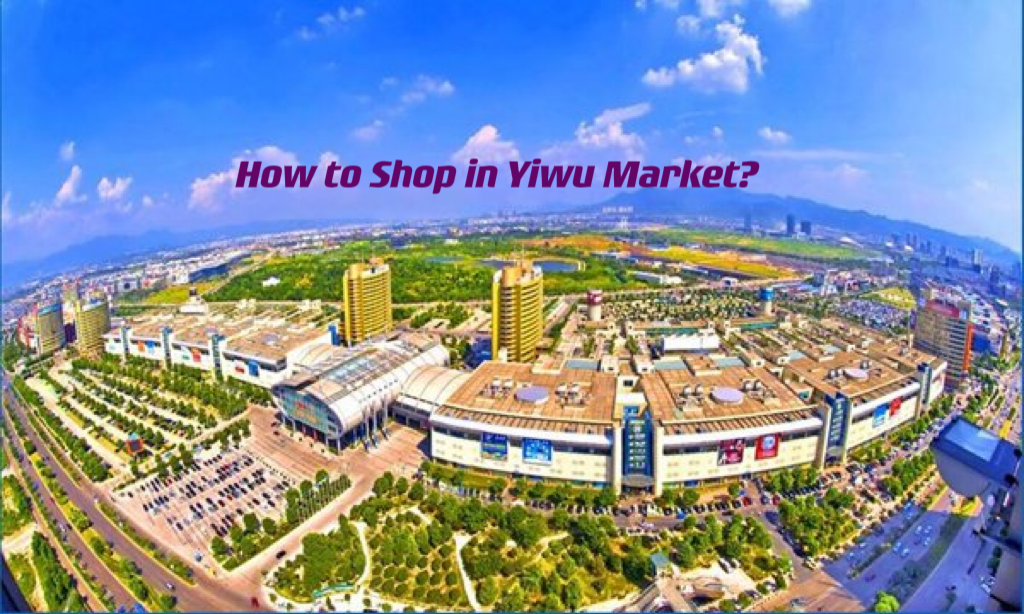
Yiwu market has more and more merchants providing English service, merchants usually give bulk discount price, buyers are advised to indicate the quantity directly to get a more suitable price.
Yiwu market has the advantage of having a wide range of products at competitive prices, which makes it ideal for small and medium-sized businesses or start-ups to make trial purchases. In addition, Yiwu has good logistic support, which makes it easy to deliver goods to all parts of the world.
Guangzhou Clothing Market
Guangzhou Wholesale Clothing Market is one of the largest and most professional wholesale clothing markets in China, specializing in fashionable and trendy styles. The market gathers about 2,000 stalls, with products ranging from men’s and women’s clothing to children’s clothing, as well as shoes, bags, accessories and other kinds of clothing products. As a professional buyer, you can find a wide range of fashionable clothing in a variety of styles and consistent quality.
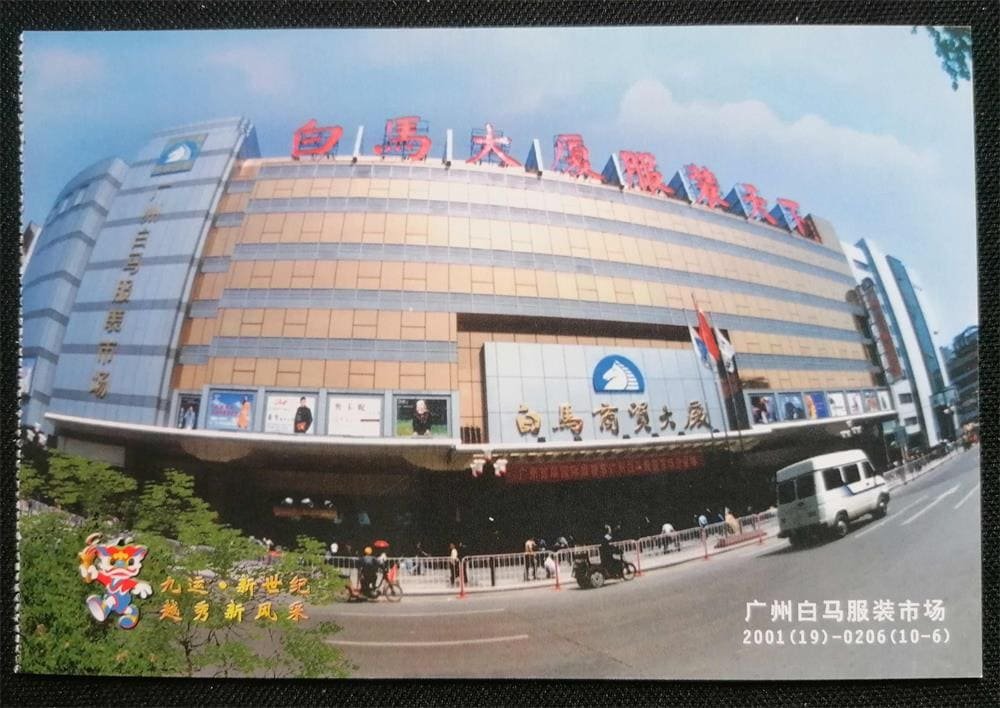
Most vendors will set a minimum purchase quantity (MOQ), usually between a few dozen and a few hundred pieces. If you are purchasing in small quantities, it is recommended to communicate with the merchants in advance, as some stalls are more flexible with small quantities. In addition, White Horse Market is adjacent to several other wholesale markets, so you can compare and contrast the MOQ requirements of different merchants.
The Guangzhou market is positioned as a relatively high-end market for clothing, with higher prices than Yiwu Trade City for buyers who demand higher quality. There may be price challenges for novice buyers, but for customers who focus on quality and unique styles, this is undoubtedly the perfect place to purchase.
Shenzhen Huaqiangbei Electronics Market
Huaqiangbei Electronics Market, located in Futian District of Shenzhen, is the world’s largest distribution center for electronic products and is known as the “paradise of electronic products”. The market covers dozens of electronic shopping malls, with tens of thousands of stalls and stores, a collection of electronic components, cell phones, computer accessories, smart home equipment, consumer electronics and other diversified electronic products, the electronics industry practitioners can not miss the procurement center.
Prices in Huaqiangbei are competitive, but due to the mixed market and large price range, it is recommended to visit several stores to compare prices when purchasing. Suppliers are usually more willing to offer discounts if purchasing in large quantities.
Huaqiangbei’s electronics market is open all year round, but it is recommended to avoid the Chinese New Year holiday, during which many businesses are closed. In addition, the electronics industry is fast-changing and many products may be new in different seasons, so it is recommended to pay close attention to market trends or important electronic exhibitions.
Below are other Chinese market profiles I’ve posted, so be sure to check them out for more details:
3.Finding Chinese suppliers from major industry clusters
When sourcing in China, understanding the concept of industrial clusters can greatly improve the efficiency of finding quality suppliers. The concentration of manufacturers and suppliers of the same type of product in a geographic area creates a scale effect called an industrial cluster. These areas then form a complete supply chain, covering raw materials, manufacturing, design, logistics and more.
China’s industrial clusters are spread all over the country, offering a wide range of goods from electronics to clothing, machinery, toys and more. The most popular clusters are concentrated in a few cities or provinces, such as Dongguan for electronics, Yiwu for small commodities, Foshan for furniture manufacturing, Guangzhou for garments and Shenzhen for high-tech products. By traveling to these clusters, buyers can not only find commodities that meet their requirements faster, but also negotiate directly with suppliers face-to-face and get more competitive prices.
Methodology for finding regional industry clusters
Firstly, you can use online resources such as Google, B2B platforms (e.g. Alibaba, 1688), etc. to search for the main production areas of the target product.
Select the city with the most suppliers according to the filter. The city or province that appears most frequently, go to the relevant supplier’s introduction page to check their operational address.
If it frequently locates to the same town or industrial area, then it is likely to be the industrial cluster of the target product.
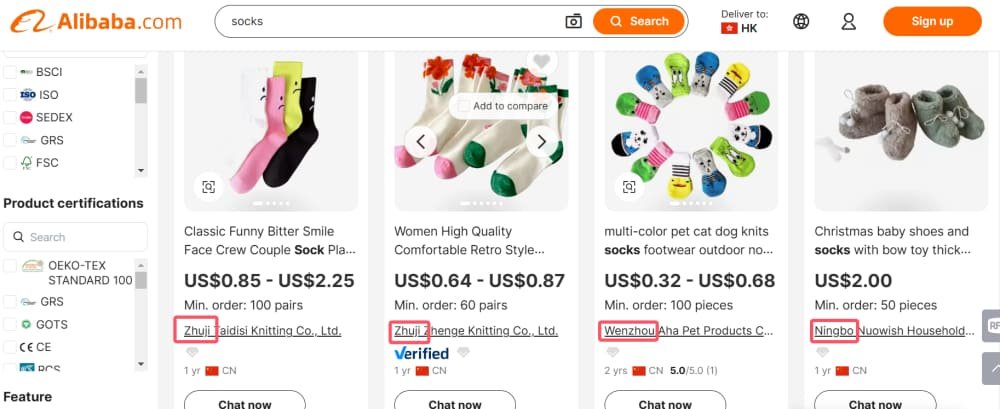
You can start by contacting companies with relevant counterpart products first through online software and agreeing on a time to visit. Then contact a few more in the same industrial cluster area to make comparisons and determine the final cooperative supplier.
Finally!
hank you for your careful reading, if this article has helped you, please share it with others. If you have any questions about this article on how to visit China to find quality suppliers, or if you have better suggestions, please let me know by leaving a comment below.
Goodcan is a professional agent purchasing company in Yiwu, if you need the best service and offer the most competitive price, please contact us!