

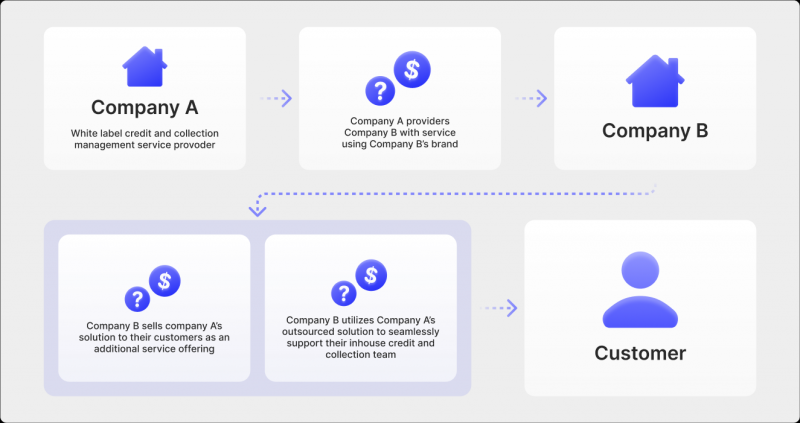
White label is a business model where one company manufactures products or provides services, and another company sells them under its own brand. This model enables brand owners to quickly launch new products, reduce research and development costs, and also offers consumers more choices.
White label products are standardized products manufactured by producers without brand logos. These products are purchased by other companies, which then affix their own brands for sale. This approach allows brand owners to focus on marketing and sales, while entrusting the heavy tasks of production and R&D to professional manufacturers.
1. Operating Process of White Label Products:
- lec and Brand Products:Brand owners meticulously study market dynamics, consumer preferences, and industry trends to precisely select suitable basic products. Subsequently, based on their brand’s core positioning, target audience’s aesthetics, and brand value proposition, they comprehensively customize the product packaging design. Every detail, from color combinations, pattern styles to material textures, is carefully crafted, and unique brand logos are skillfully integrated. This process creates products that not only have practical functions but also distinct brand characteristics, enabling them to stand out in the highly competitive market.
- Sales and Marketing Promotion:Brand owners fully utilize diverse online and offline channels. Online, they rely on popular e-commerce platforms, official brand websites, and social media networks. Through methods such as live streaming sales, content marketing, and search engine optimization, they attract traffic. Offline, they set up physical stores and counters, participate in various trade shows and promotional activities. By doing so, they comprehensively introduce products to the market and simultaneously conduct sales and promotion activities to enhance product awareness and market share.
- Consumer Purchase and Use:When consumers shop in the market, the products they purchase prominently display the brand owner’s logo, showcasing brand individuality in appearance. During actual use, the performance, quality, and other user experiences of these products are similar to those of other similar products in the market. They meet consumers’ basic functional requirements for the products and also bring a certain level of emotional satisfaction through brand added value.
1. Advantages:
- Rapid Market Launch:Thanks to the fact that white label products have already completed the initial development stage, brand owners do not need to spend a great deal of time on research and development. They can quickly introduce products to the market. This timeliness advantage allows brand owners to reach consumers first, gain the upper hand in the highly competitive market environment, rapidly accumulate market share, and lay a solid foundation for subsequent sustainable development.
- Focus on Core Business:By adopting the white label product strategy, brand owners can free themselves from the complex product development process. They can concentrate limited human, material, and financial resources on core business areas such as brand building, marketing, and sales. Through in-depth exploration of brand connotations, precise positioning of the target audience, and formulation of more targeted marketing strategies, they can enhance brand awareness and product sales, thereby comprehensively improving operational efficiency and maximizing corporate benefits.
2. Challenges:
- Difficulty in Quality Control:Since the production of white label products is carried out by third-party suppliers, brand owners find it difficult to conduct comprehensive and detailed supervision of the production process at the production site. In this situation, brand owners may face the risk of unstable product quality. For example, fluctuations in raw material quality and inconsistencies in production processes may all lead to uneven product quality, affecting brand reputation.
- Difficulty in Building Brand Loyalty:When purchasing white label products, consumers often pay more attention to the product’s functions and prices, resulting in relatively low brand awareness and loyalty. This means that brand owners cannot simply rely on the brand effect of the products themselves to attract and retain consumers. Instead, they need to comprehensively enhance brand value through other means, such as providing high-quality after-sales services, creating unique brand stories, and carrying out diverse marketing activities, in order to cultivate consumers’ brand loyalty.

White label products are widely used in various industries. Here are some typical application areas and examples:
1. Food and Beverage Industry:
- Supermarket Private Labels:Many large supermarkets have launched their own brand food and beverages as an important means of differentiated competition. Take Walmart as an example, its Great Value series covers a wide range of categories, from daily staples, snacks to various beverages. These products are all produced by carefully selected third-party manufacturers according to the quality standards set by Walmart, and then sold under Walmart’s exclusive brand Great Value. Similarly, Target’s Good & Gather series is also outstanding, including organic foods, specialty baked goods, etc. These products are also produced by third parties and presented to consumers under the Target brand, providing consumers with more cost-effective and distinctive shopping options.
- White Label Coffee:In the coffee market, some coffee brands enter into cooperation agreements with professional coffee bean suppliers. The suppliers carefully select and roast coffee beans according to the brand owners’ taste preferences and quality standards, and then package them into the brand owners’ own brand coffee products. When consumers purchase such coffee, they only see the brand owners’ logos and have no knowledge of the actual suppliers of the coffee beans. Such products are white label coffee.
2. Cosmetics and Skincare Industry:
- Skincare Brands:Many well-known skincare brands actively establish in-depth cooperative relationships with experienced manufacturers to launch unique own-brand skincare products. During the product research and development stage, brand owners carefully customize product formulas according to the skin types, efficacy requirements of the target consumer group, and current skincare trends. Every step, from the selection of ingredients to the determination of ratios, is carried out with precision. In terms of packaging design, brand owners also invest a great deal of effort. They carry out personalized designs for every aspect, from the material and shape of the bottle to the pattern and text of the label, to ensure that the product appearance can accurately convey the brand concept and image. When consumers purchase such products, they see the prominent brand logos, and the production process behind them embodies the joint wisdom and efforts of brand owners and manufacturers.
- Cosmetics Brands:Many cosmetics brands are well aware of the importance of product differentiation. They actively cooperate deeply with professional manufacturers. Relying on mature R & D technologies and production processes, the manufacturers meticulously create products according to the specific requirements of the brand owners, covering every aspect from product formulas, ingredient screening to packaging design, and efficacy positioning. The brand owners, based on market research results, accurately grasp the differences among different consumers in terms of skin types, ages, preferences, and efficacy demands, and launch their own brand cosmetics products. These products cover multiple categories such as skincare, makeup, and perfume, such as refreshing oil-control skincare series for oily skin, creative makeup products that meet the trendy aesthetic needs of young consumers, and unique perfumes that suit people with different temperaments, comprehensively meeting the diverse needs of different consumers.
3. Electronics Industry:
- Mobile Phone Accessories:Many well-known mobile phone accessory brands, such as [Brand A] and [Brand B], enter into cooperation agreements with experienced manufacturers. Relying on their mature production processes, the manufacturers create accessories such as mobile phone cases and chargers for the brand owners. After these products are produced, the brand owners affix their unique trademarks. When consumers make purchases, they see the brand owners’ trademarks instead of the manufacturers’ information.
- Smart Home Devices:Some influential smart home brands enter into cooperation agreements with manufacturers with professional production capabilities. The manufacturers customize and produce products such as smart bulbs and smart sockets for the brand owners according to their specific design requirements and quality standards. These products are then launched into the market after being affixed with the brand owners’ own trademarks. When consumers make purchases, they often pay more attention to the quality and service represented by the brand, ignoring the actual manufacturers behind the products. This is the typical operation mode of white label products in the smart home field.
4. Software and Technology Services Industry:
- White Label SaaS Products:Some software companies specifically develop white label SaaS (Software as a Service) products, which have a high degree of versatility and customizability. Take the online booking system as an example. It can meet the booking management needs of different industries such as hotels, travel companies, and event organizers. Enterprises that purchase the white label can adjust the interface layout and functional modules according to their own business processes and brand styles, and package it as their own product for promotion to customers. The customer relationship management system is also a common white label SaaS product. Whether it is a small start-up enterprise or a large group company, they can use such white label products to quickly build a system that meets their own customer management needs. Through customizing fields, workflows, and other settings, they can achieve efficient management of customer information and optimization of the sales process, and then sell it as their own product to downstream customers.
- Payment Gateways:In the fintech field, some powerful payment companies provide white label payment gateway services. Relying on advanced technical architectures and strict security standards, they create stable and reliable payment infrastructure. After obtaining authorization, other companies can rebrand the payment gateway and launch it as their own exclusive payment solution. In this way, these companies can quickly provide safe and reliable payment services to customers, covering various scenarios such as online payment and mobile payment. This helps merchants seamlessly connect to various payment channels, improving transaction processing efficiency and user payment experience.

Choosing the right white label product supplier is crucial to ensure product quality and brand value. Here are some suggestions for selecting suppliers:
- Supplier Reputation:When choosing a supplier, prioritize partners with good reputations and excellent word-of-mouth. You can check the feedback from the supplier’s previous customers to understand the stability of product quality, such as whether there are frequent defective products, and the level of service, such as whether deliveries are on time and whether after-sales services respond promptly. Only by cooperating with high-quality suppliers can you ensure that the purchased white label products meet high standards in both quality and service, laying a solid foundation for subsequent market promotion and customer maintenance.
- Product Quality:Comprehensively and deeply understand the supplier’s quality control system. Examine multiple key aspects, including the raw material procurement channels, production processes, and factory inspection standards, to ensure that every step from production to delivery of the products strictly complies with relevant industry standards and established requirements, providing consumers with high-quality white label products.
- Production Capacity:Carefully assess the supplier’s production capacity, including the advanced nature of production equipment, the number and skill level of employees, and the previous production scale. At the same time, thoroughly investigate the delivery cycle promised by the supplier, taking into account factors such as raw material procurement cycle, production process duration, and logistics and distribution time. Ensure that the supplier can continuously and stably provide sufficient product supply to meet market demand in the face of rapidly changing market needs.
- Reasonable Price:Conduct extensive market research, compare the product quotations of different suppliers, and comprehensively consider factors such as product quality, delivery cycle, and after-sales service. Select the partner with the lowest overall cost and the highest cost-performance ratio under the premise of meeting all basic requirements, ensuring that every investment can bring the greatest value return.
- After-sales Service:Fully understand the supplier’s after-sales service policy, clarify its response time, service coverage, and problem-solving process. Ensure that when any problems occur with the products, whether they are functional failures or quality defects, you can quickly contact the supplier and obtain effective solutions in a timely manner, minimizing the impact on business operations.

With the changes in market demand and the progress of technology, the future trends of white label products may include:
- Personalized Customization:As the consumer market places increasing emphasis on individual uniqueness, brand owners usually require suppliers to provide more customization options. From the selection of product appearance colors, patterns, and materials, to the special settings of functions, such as the personalized operation interfaces of smart devices and the customized training programs of fitness equipment, all need to meet consumers’ diverse needs for personalized products.
- Intelligent Products:With the development of the Internet of Things and artificial intelligence technologies, white label products may evolve towards intelligence, such as smart home devices and smart wearable devices.
- Green and Environmentally Friendly:As consumers’ attention to environmental protection and sustainable development continues to rise, brand owners have keenly grasped this trend and turned their attention to the field of green production. They actively select environmentally friendly materials to reduce harm to the environment from the source of product raw materials. At the same time, they adopt advanced production processes, optimize production flows, reduce energy consumption and waste emissions, and carefully launch a series of green and environmentally friendly white label products to meet consumers’ pursuit of a green lifestyle and conform to the environmental protection trend of the times.
- Global Layout:With the facilitation of global trade, brand owners may engage in cross-border procurement and sales to expand into international markets.

Conclusion
I hope the above – shared content will be helpful to you. If you have any thoughts or questions, please feel free to leave a comment or contact us!
