
As a key part of supply chain management, agency procurement not only requires professional procurement knowledge, but also needs to have a deep understanding of international logistics services. This article will delve into the five issues that exporters are most concerned about in international logistics services, and provide solutions and suggestions from a professional perspective to improve the convenience and efficiency of agency procurement.
1. Logistics cost control
The primary concern of exporters is how to effectively control logistics costs. As an agent procurement, we can help exporters reduce logistics costs in the following ways:
- Cost-benefit analysis: Cost-benefit analysis of different modes of transport (sea, air, land) to select the most economical transport option.
- Advantages of bulk procurement: through centralized procurement and bulk transportation, economies of scale can be achieved and unit transportation costs can be reduced.
- Long-term partnership: Establish long-term relationships with logistics service providers to strive for better transportation prices.
- Cost transparency: Provide exporters with detailed logistics cost analysis reports, including transportation, insurance, customs duties and other expenses, to achieve cost control.
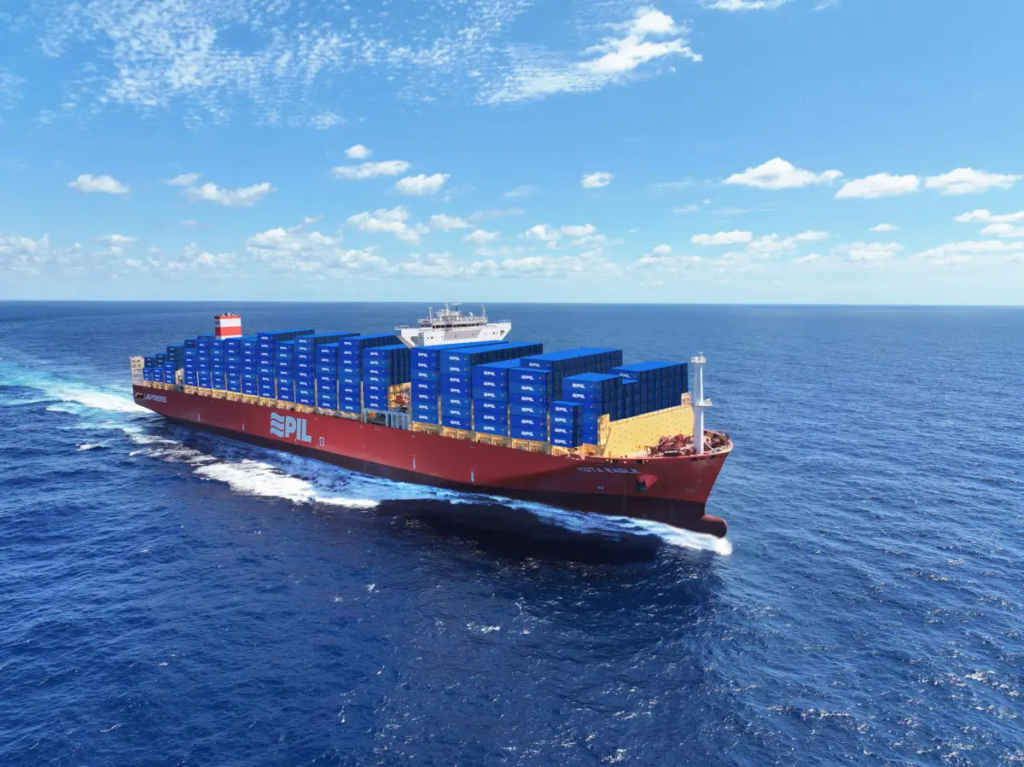
For example, for bulk shipments, sea freight is an ideal mode of transportation due to its lower cost, and despite the longer transit times, it is a cost-effective option for goods that are not in urgent need of fast delivery.
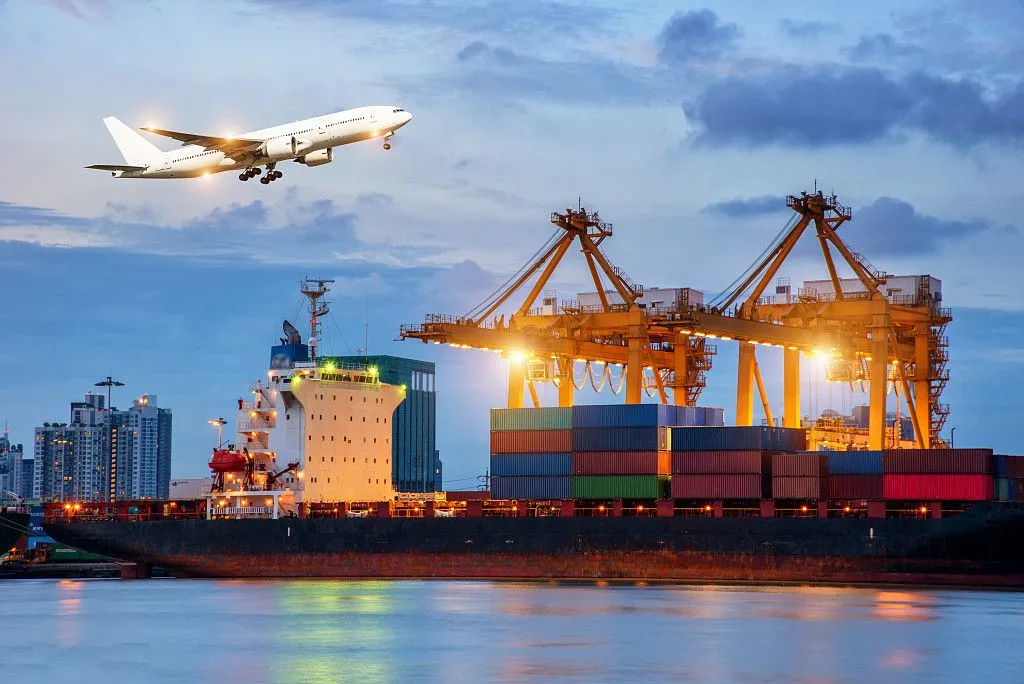
Conversely, for time-sensitive shipments, such as fashion products that need to respond quickly to market demand or food products with a short shelf life, air freight is preferred due to its fast shipping capacity. However, the cost of air freight is relatively high, so agent procurement must weigh the dual factors of cost and time when developing a logistics plan to meet the specific needs of customers.
This requires an in-depth understanding of the characteristics of the goods, including their size, weight, perishability or fragility, as well as the customer’s delivery deadlines and budget constraints. Based on this information, agent sourcing is able to design customized logistics solutions that are both cost-effective and ensure timely delivery.
2. Cargo transit time
Fast and reliable transportation of goods is another concern for exporters. As an agent purchaser, we can take the following measures to reduce transit time:
- Logistics route optimization: By analyzing different logistics routes, the fastest transportation path is selected.
- Plan ahead: Work with exporters to plan ahead for shipment schedules to avoid delays during peak periods.
- Real-time tracking system: Provide cargo tracking services to ensure that exporters can know the status and location of goods in real time.
- Emergency response plan: Develop a contingency plan for possible shipping delays, such as unforeseen factors such as weather, political events, etc.

By using an advanced logistics management system, we can monitor the status of cargo transportation in real time, adjust the transportation plan in time, and ensure that the goods arrive on time.
The advantages of such a system are the ability to deal with transportation issues in a timely manner, reduce potential losses, and increase customer satisfaction with logistics services.
Taking China’s ANE Logistics as an example, the company has piloted an automated sorting line at the Xiaoshan Distribution Center in Hangzhou, Zhejiang, and the Zhengzhou Distribution Center in Henan, relying on an intelligent control system to reduce manual intervention and operation links through high-precision scanning and weighing, and realize the automatic operation of goods.
The system can process 30,000 pieces of goods per day, with a peak of 40,000 pieces in a single shift, which effectively reduces operating costs and significantly improves distribution efficiency.
According to a case study, the average transit time of goods was reduced by 30% by optimizing logistics routes, a result that is reflected in the practice of the port of Huai’an, China, which has successfully implemented a seamless connection between the inland branch line and the ocean trunk line through cooperation with global shipping companies, forming a new efficient and convenient logistics channel, with an average cost savings of nearly 50% per container.
These data fully demonstrate the importance of optimizing logistics management systems and routes to improve logistics efficiency and reduce costs.
3. Tariff and tax policy
Exporters need to understand the customs and tax policies of the destination country to ensure compliance and plan costs wisely. Agency procurement can help in the following ways:
- Tariff consulting services: Provide professional tariff consulting services to help exporters understand the tariff policies of different countries.
- Tax Planning: Assist exporters with tax planning and reduce their tax burden by taking advantage of tax treaties and preferential policies.
- Compliance checks: Ensure that all export documents comply with the import requirements of the destination country, avoiding additional costs and delays due to documentation issues.

By working with a professional tax advisor, we can provide exporters with the latest tax policy information to help them plan their taxes appropriately and reduce costs. It is estimated that exporters can reduce tax costs by up to 15% with effective tax planning.
4. Cargo tracking and security
The safety and real-time tracking of goods during transportation is of paramount importance to exporters. Purchasing agents can take the following steps to improve the accuracy and security of cargo tracking:
- Technology application: use modern logistics technology, such as RFID, GPS, etc., to improve the accuracy of cargo tracking.
- Insurance services: Provide cargo insurance services for exporters to reduce risks during transportation.
- Safe packaging: Ensure that the packaging of goods meets international transportation standards and reduce the risk of damage to goods during transportation.
- Partner selection: Choose a reputable logistics partner to ensure the safe and on-time arrival of your goods.

For example, by using blockchain technology, we can ensure the immutability of cargo information and improve the transparency and security of cargo tracking. A study showed that the adoption of blockchain technology reduced the rate of lost or damaged goods by 40%.
McDonald’s Corporation is a globally renowned fast-food chain brand whose tax planning strategy has attracted much attention worldwide. McDonald’s achieved effective tax optimization by setting up McD Europe Franchising Sàrl, an intellectual property holding company in Luxembourg.
At the end of 2008, McDonald’s transferred its European franchise to a Luxembourg company after Luxembourg announced that it would enjoy a low tax rate on income derived from intellectual property. This strategy allows the company to legally take advantage of Luxembourg’s tax rate advantage and move a portion of IP-related profits to a region with a lower tax burden, thereby significantly reducing the company’s global tax burden.
In July 2009, McDonald’s moved its European headquarters from London to Geneva, a move that enabled the company to strategically manage key international property rights in Switzerland, including granting these rights to McDonald’s franchisees in Europe. Through this tax planning, McDonald’s has successfully optimized its tax arrangement in Europe and achieved the goal of tax burden optimization.
Through these tax planning measures, McDonald’s not only reduces tax costs, but also enhances its competitiveness in the global market. Through effective tax planning, exporters are not only able to reduce their tax burden, but also better manage cross-border capital flows and optimize their global business footprint.


5. Market Access and Compliance
In the globalized business environment, exporters face many challenges when entering new markets, among which market research and compliance guidance are particularly important. The following is an in-depth analysis and real-life case study of this process to demonstrate how agency procurement can help exporters smoothly enter their target markets.
- Market Research: Provide market research on the target market, including consumer needs, cultural differences, and business habits.
- Compliance guidance: Guide exporters to comply with the laws and regulations of the target market, including product standards, packaging requirements, etc.
- Certification services: Assist exporters to obtain necessary product certifications, such as CE marking, FDA approval, etc.
- Localization services: Provide localization services, including language translation, cultural adaptation, etc., to help exporters better integrate into the local market.

By collaborating with local compliance experts, we can provide customized market access solutions for exporters to ensure their products can smoothly enter the target market. According to a market research, the new market penetration rate of exporters has increased by 25% through effective market access strategies.
Taking OPPO from China as an example, the company’s operations in Indonesia are based on the understanding of providing good products for consumers, starting from the needs of local consumers, taking user insights as the starting point, and combining technological capabilities to provide customized and differentiated product experiences for local consumers. This deep localization strategy not only helped OPPO succeed in the Southeast Asian market, but also provided valuable market access experience for other exporters.

OPPO’s success in Indonesia can be attributed to several key factors. Firstly, OPPO adheres to the principle of “the best globalization is localization”, providing products that are tailored to the local market characteristics through in-depth understanding of the Indonesian market and consumer needs. For example, OPPO found that Indonesian consumers use disposable waterproof bags when using their phones on rainy days, which affects the effectiveness of calls. Therefore, OPPO has added waterproof optimization treatment to its new products. In addition, OPPO has also noticed the demand of Indonesian consumers for handwriting pens on large foldable screen phones, as well as their preference for thick phone cases. Therefore, OPPO has paired handwriting pens and fully wrapped phone cases with large foldable screen phones launched in Indonesia.
Secondly, OPPO has launched the Find N2 Flip, a small foldable screen phone in Indonesia. This phone features a more practical vertical large outer screen and utilizes self-developed hinge technology, making it almost impossible to see creases on the unfolded screen, thus becoming the sales champion of this category in Indonesia. This not only reflects OPPO’s understanding of the market and products, but also requires technical strength as the foundation.
In terms of service, OPPO has built nearly 160 after-sales service centers in Indonesia to provide full cycle protection for local consumers. This level of investment and determination to root in Indonesia are evident.
Finally, OPPO provides revenue protection for channel partners, based on the principle of mutual benefit, a unified pricing system, and operational and personnel support, to ensure the long-term revenue of local channel partners in Indonesia. OPPO requires itself to provide local distributors with a gross profit margin far higher than the industry level, and guide distributors to make long-term money. It strictly requires distributors not to sell high or low, and each company must sell according to standard pricing.
Through these real-life cases, we can see that agency procurement provides customized market access solutions for exporters by offering market research, compliance guidance, certification services, and localization services, ensuring that their products can smoothly enter the target market. These services not only help exporters reduce the difficulty of market access, but also enhance their competitiveness in new markets. The case of OPPO proves the effectiveness of deep localization strategy and provides valuable reference for other exporters.

6. Risk Management
In international logistics, risk management is a part that cannot be ignored. Proxy sourcing can help exporters with risk assessment and management in the following ways:
Risk identification: It is the first step in logistics risk management, which involves the collection and analysis of internal and external information to identify various sources of risk that may affect logistics activities, such as natural disasters, policy changes, market fluctuations, etc.
For example, natural environmental risks are not controlled by human factors and are highly unpredictable, and such risks are generally caused by the impact of climate change, such as sudden rainfall and snowfall, typhoon attacks, earthquakes, mudslides, and wars.
Risk assessment: It is a quantitative analysis of the identified risks, assessing the probability of their occurrence and the degree of potential impact, determining the risk level, and providing a basis for subsequent risk control.
Risk assessment in logistics requires understanding of different types of logistics risks, including supply chain disruption risks, transportation risks, inventory risks, and legal and compliance risks.

Risk mitigation strategy: According to the risk assessment results, formulate corresponding risk control measures, such as purchasing insurance, establishing emergency plans, optimizing the layout of logistics networks, etc., to reduce the probability and impact of risks.
For example, by optimizing logistics operations and reducing risk losses, such as increasing packaging strength and choosing more reliable logistics partners, we can reduce the risk of loss.
Insurance and contracts: Purchasing appropriate cargo and transportation insurance is one of the important means of reducing risk. Ensure that the goods are properly protected during transportation, and can be compensated accordingly in the event of an accident or loss of goods.
In addition, clear contracts and agreements with partners that stipulate responsibilities and obligations can help resolve potential disputes and risk issues.
For example, the model logistics insurance contract lists in detail the key information such as the subject matter of insurance, the amount insured, and the insurance period, so as to provide protection for the goods and their related interests in the logistics process.

The above conclusion
By addressing the seven issues that concern exporters the most, we can provide more convenience for the agency procurement industry and create more value for exporters.
In the globalized business environment, the role of agency procurement is becoming increasingly important. We need to constantly learn and adapt to new market changes, utilizing modern technology and services to provide customers with more efficient, safe, and economical logistics solutions.
We sincerely invite you to continue browsing our website for more in-depth analysis and solutions on agency procurement. If you have any questions about this article or would like to learn more detailed information about our services, please do not hesitate to contact us immediately. We look forward to working with you to explore the infinite possibilities of the global market together!
