
When sourcing goods from China, shipping goods can be a complicated process. Choosing the right transportation option is relevant to ensure timely delivery, product integrity and freight costs.
From this article, it focuses on the solutions of some mainstream transportation modes, so that you can understand how to choose the right one for you in different situations. Analyze the pros and cons of various types of transportation solutions and assemble practical application tips to make your logistics management smooth, which is especially important for small businesses and e-commerce!
- 1.Who can provide logistics services
- 2. What you need to know about trade terms
- 3. Express delivery under 500kg
- 4. Cargo with a volume of 2 CBM or more
- 5. Air transportation of cargo over 500 kg
- 6. Full container railroad freight
- 7. E-commerce maritime express
- 8. The final step is the clearance of the goods
1.Who can provide logistics services
When exporting goods from China again, the choice of logistics is very heavy, especially when you are confronted with a wide range of transportation modes and service providers, how to find the solution that really suits the nearest?
In fact, international freight forwarders and transportation companies are the two main options, and their services have their own characteristics:
Transportation company: direct delivery of goods to the destination
Transportation companies are the core players that actually undertake the task of transporting goods, such as ocean carriers, air freight companies, and international courier companies. They only provide transportation services, and other aspects need to be handled by the companies themselves.
International Freight Forwarders: The “Managers” of the Logistics World
Freight forwarders are professionals who arrange the whole process of logistics from cargo collection, customs clearance to transportation and insurance. They will select the most suitable mode of transportation (e.g. air, sea or railroad transportation) according to the nature, quantity and timeliness of the goods.
Freight forwarders usually have access to large-scale cooperation with shipping companies, airlines, etc., so they can get you lower freight rates than direct personal contact. The price advantage of a freight forwarder is especially obvious for large shipments.
If you are just starting to import goods from China, the logistics aspect may be confusing, especially the choice of customs clearance, customs brokerage and transportation methods. A freight forwarder can help you sort out the process and avoid mistakes or delays caused by not knowing the process.
Your purchases involve multiple countries or regions, and choosing a freight forwarder will be more advantageous. A freight forwarder can provide you with transportation solutions and services for different markets without requiring you to communicate with multiple carriers on your own.
Bulk cargo is more expensive to transport, and freight forwarders can help you get more competitive transportation rates through their global logistics network. Especially when your volume increases, freight forwarders can often get you lower prices than individual traders.
If you want to go directly to a freight forwarder instead of going through a supplier, you can try asking for cheap recommendations of reliable freight forwarders that you trust. Or go directly to Google to find freight forwarders, or try international freight platforms such as Expeditors and Flexport for queries.
Freightos provides global transportation services, but its focus is on sea and air freight. It may have more limited options for specific modes of transportation (e.g. rail or inland transportation), especially in certain countries and regions.
For customers who require integrated supply chain management or complex logistics operations, Freightos is more of a price comparison platform than a full logistics service provider.
2. What you need to know about trade terms
A trade term, simply put, is an agreement between a buyer and a seller on matters such as transportation, delivery, and cost of goods.
One of the biggest uses of trade terms is to make it clear to both parties who is responsible for paying for shipping, insurance, duties, and other costs. If you know exactly what each term means, you can avoid too much negotiation and misunderstandings about certain costs.
If you want to learn more about various details about trade terms, this blog “What are the most effective trade terms?” should help you.
EXW (Ex Works): This is the “cheapest” option for buyers, but there are risks. The seller’s responsibility ends when the goods are delivered to the seller’s premises. From then on, the buyer is responsible for everything, including transportation, customs and insurance. If you are the buyer, you will be responsible for organizing and paying for everything.
FOB (Free On Board): Under FOB conditions, the seller’s liability ends when the goods are loaded onto the ship at the port of departure. From that point on, the buyer bears all costs and risks.
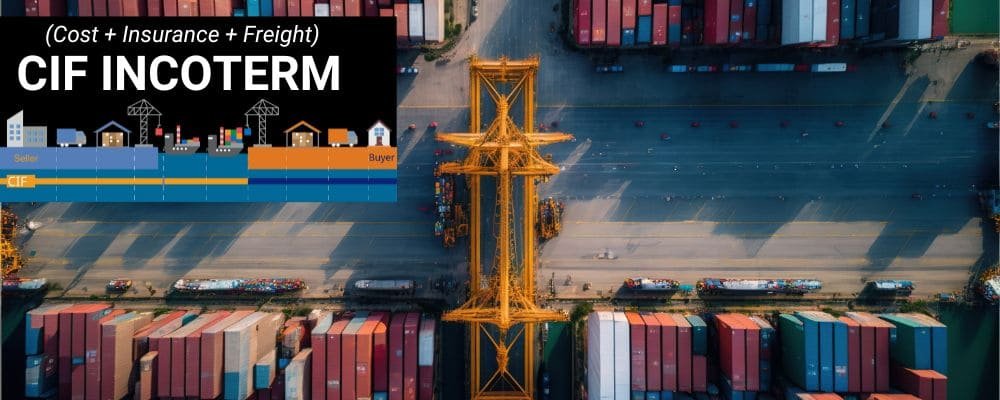
CIF (Cost, Insurance and Freight): This term is more buyer friendly because the seller is responsible for transportation and insurance costs. The seller delivers the goods to the port of destination, but you are responsible for clearing customs and receiving the goods once they arrive.
DDP (Delivered Duty Paid): this is the most seller friendly terms. The seller handles everything, including shipping, insurance, duties and taxes, until you deliver. For buyers, this means less hassle, but usually a higher price.
3. Express delivery under 500kg
When you need to ship something quickly, but weighing no more than 500 kilograms, courier shipping is often the best solution. It’s fast, reliable and ensures that your shipment arrives on time, whether it’s a business product or a personal item.
The main advantages of courier services:
- Fast speed: it usually takes 3-5 working days to major countries such as the United States and Europe.
- High on-time rate: the on-time rate provided is usually above 95
- Low risk of damage: goods damaged during transportation, the courier company provides compensation services
For international express shipments under 500kg, DHL, FedEx, UPS, EMS and SF are common choices; DHL and FedEx offer fast and reliable service for time-sensitive parcels; UPS offers a wide range of shipping options to suit a variety of needs; and EMS and SF are cheaper and suitable for shipments where time-sensitive requirements are less urgent, especially in Asia, where SF is is particularly strong in Asia.
In international express delivery, prices are usually calculated by weight and destination, and the actual cost of a shipment can vary between couriers and modes of transportation.
From China to the United States or Europe, the cost is 5~7 dollars. It will be more expensive in other areas, except for the French network Asian countries, which are relatively cheaper.
International couriers usually calculate the actual weight and the volumetric weight and charge according to the heavier side. The formula for volumetric weight calculation is usually:
Volumetric weight = 6000 length x width x height
Transportation and logistics is a complex process, including the choice of transportation mode, route planning, document preparation, customs clearance and final distribution. Freight forwarders are able to handle all these complex processes in a one-stop shop.
Freight forwarders usually have long-term relationships and a large volume of transportation needs, and they are able to take advantage of discounts from transportation companies. If you contact the transportation company yourself, you may not be able to get such discounts from the freight forwarder, and you will need to deal with price negotiation, comparisons, and other tasks individually, which will lead to higher costs.
4. Cargo with a volume of 2 CBM or more
When you need to transport goods larger than 2 cubic meters (CBM), ocean freight is the most common and economical option. Compared to airfreight, ocean freight is suitable for larger, heavier shipments, especially when timeliness requirements are not as stringent. Despite longer transit times, ocean freight offers a more cost-effective solution.
There are two main types of sea transportation: Full Container Load (FCL) and Less Than Container Load (LCL). You have enough cargo volume (usually 20-foot containers or 40-foot containers), FCL is the most suitable choice, and this way is relatively cheap.
If you don’t have enough cargo to fill a container (usually less than 15 cubic meters), consolidation shipping is a more suitable option.
Sea freight is suitable for larger and heavier shipments or shipments that are not to be delivered in a short time frame.
The calculation of sea freight costs is mainly based on the volume of the goods (in cubic meters CBM), the port of destination, the mode of transportation (FCL or LCL), surcharges, etc.
| Mode | Charge | Applicable Scenario |
| LCL | $500-$600 | Small quantity cargo (<15 CBM), not in a hurry, want to accurately charge by volume. |
| FCL | $1,500-$2,000 | Full Container Load (FCL) $1,500-$2,000 Large volume of goods (>15 CBM), FCL is more economical, suitable for customers who want to reduce the risk of transit and improve the time of transportation. |
5. Air transportation of cargo over 500 kg
Airfreight is a proven and efficient option for transporting cargo weighing more than 500 kilograms.
Airfreight can reach almost all international airports, especially those cities that cover international trade hotspots. For example, places like Los Angeles, Frankfurt, and Singapore have an efficient network of cargo airports.
An order valued at $100,000 can be sold in five days after arriving in the U.S. via air freight, whereas ocean freight can take more than 30 days.
Despite the higher cost of airfreight, its speed, coverage, security, and support for liquidity make it the preferred solution when shipping over 500 kilograms of goods, especially in high-value, time-sensitive delivery scenarios.
For small quantities of goods, express costs are relatively low and include door-to-door delivery; for large quantities of more than 500 kilograms of goods, air transportation is more advantageous in terms of unit costs.
6. Full container railroad freight
For companies transporting larger cargoes, full containerized rail freight is becoming a practical alternative to sea and air freight.
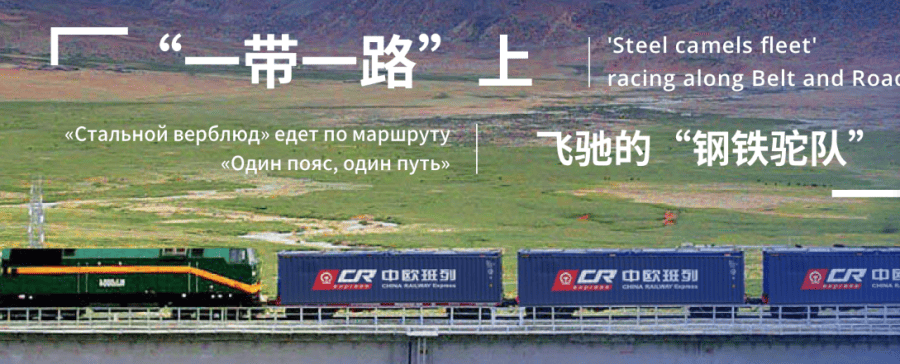
It takes 30-45 days to ship a container from China to Europe by sea, while rail freight cuts the time in half and can arrive in 15-20 days.
Air transportation is faster but more expensive. The cost of shipping a 40-foot container by air can exceed $20,000, while rail transportation costs between $5,000 and $7,000, making rail a more economical option.Prices are for reference only, please check railroad freight, China-Europe Railway Express.
Railroad freight connects China to many countries in Europe and Asia. The main destinations are Europe, Central Asia, Russia and the Middle East. Popular Chinese departure cities include Yiwu, Chongqing, Chengdu, Zhengzhou and Xi’an, which can be connected to Europe via the Eurasian Railway.
7. E-commerce maritime express
If you run an e-commerce business and regularly ship goods internationally, you may have come across the term “ocean express”. This specialized logistics service combines the cost-effectiveness of ocean freight with the speed of express shipping.
Popular e-commerce platforms often consolidate ocean express logistics to optimize delivery times.
- Mazon FBA (Fulfillment by Amazon): many sellers use ocean express to send inventory to Amazon warehouses in the US, Europe and Australia.
eBay sellers: this is a cost-friendly option for bulk shipments to customers in Europe or Asia.
Alibaba and Global Sellers: Bulk shipping via Ocean Express reduces shipping costs for products shipped from China to Western markets.
China to USA: usually 15-25 days;China to Europe: about 20-30 days;China to Australia: takes about 12-20 days.If you want to choose ocean express as a shipping solution, it’s best to consult a freight forwarder located in China and engaged in Amazon FBA.
8. The final step is the clearance of the goods
Customs clearance of goods is the final stage of international trade, and timely and successful customs clearance not only ensures that goods arrive on time, but also avoids additional delays and costs.
What documents are required for customs clearance?
- Commercial Invoice (Commercial Invoice): A detailed statement of the value of the goods, including information about the seller and buyer.
- Packing List: describes the specific content, quantity, weight and packing method of the goods.
- Bill of Lading (B/L): a document certifying the transportation of goods.
- Certificate of Origin (COO): A document that proves where the goods were produced.
- Customs Declaration Form: A document used to declare the details of goods.
If you are not very familiar with the customs clearance process, you can choose an experienced freight forwarder to help you handle all the processes. The forwarder will provide corresponding documents according to the policies and regulations of the country you want to export to, saving time.
Globally most countries use the HS Code (Harmonized System Code), but some countries may apply different tax rates to the same goods. For example, India charges GST (Goods and Services Tax) in addition to customs duty, while goods from the European Union may be subject to VAT (Value Added Tax).
Ultimate
I hope this post on the best solutions for shipping from China has helped you feel more confident in tackling each step of importing goods from China. If you have any questions about this post, please let me know in the comments below.
Goodcan is a professional agent purchasing company in Yiwu, if you need the best service and offer the most competitive price, please contact us!
