
Are you considering importing products from China? If you are thinking of starting to do so, the first step is to find a reliable Chinese supplier who will give you a quote for the amount of product you are ordering. Knowing where the trade belongs is important if you want to get an accurate quote for your next international order.
EXW, FOB, CFR, CIF, DDP, FCA are some of the trade terms you should have heard of, and choosing the right terminology can prevent unexpected costs, transportation delays and miscommunication with suppliers. So what are the most effective trade terms for getting accurate quotes?
In this post, I’m going to cover the most commonly used trade terms and how to use them in 6 important points to keep things clear, predictable and budget friendly. I will share practical tips that will allow you to avoid some of the pitfalls and allow you to get accurate quotes.
1.What is a Trade Term/Incoterm? Is it important to understand Trade Term/Incoterm?
Before you need a quote from a supplier, you want to understand some trade terms. By understanding trade terms, you can define who is responsible for transportation costs, insurance, and the logistics of moving goods from one country to another.
Choosing the right Incoterms can mean the difference between an easy, hassle-free transaction and one fraught with unexpected costs or delays. By familiarizing yourself with these terms, you’ll be better able to get accurate quotes and avoid common misunderstandings with suppliers.
In practice, familiarizing yourself with these terms will allow you to take the initiative in negotiations. For example, if you’re a small business buyer, you may prefer “CIF” (Cost, Insurance and Freight), which means you only have to deal with the cost at the port of destination, while the seller pays for the upfront transportation and insurance. This knowledge not only allows you to make a more informed choice, but also saves you time and effort and reduces potential transportation risks. Therefore, familiarizing yourself with trade terms is essential for you to make professional and efficient decisions in international trade.
In international trade, there are dozens of trade terms, and the ICC (International Chamber of Commerce) publishes a book every once in a while to standardize trade terms. In fact, you do not need to know all belong to, only need to know part of the common trade terms EXW, FOB, CFR, CIF, DDP, FCA . I will introduce them one by one to help you understand their practical application as soon as possible.
2.EXW, FOB, CFR, CIF, DDP, FCA ,Which one is the most suitable?
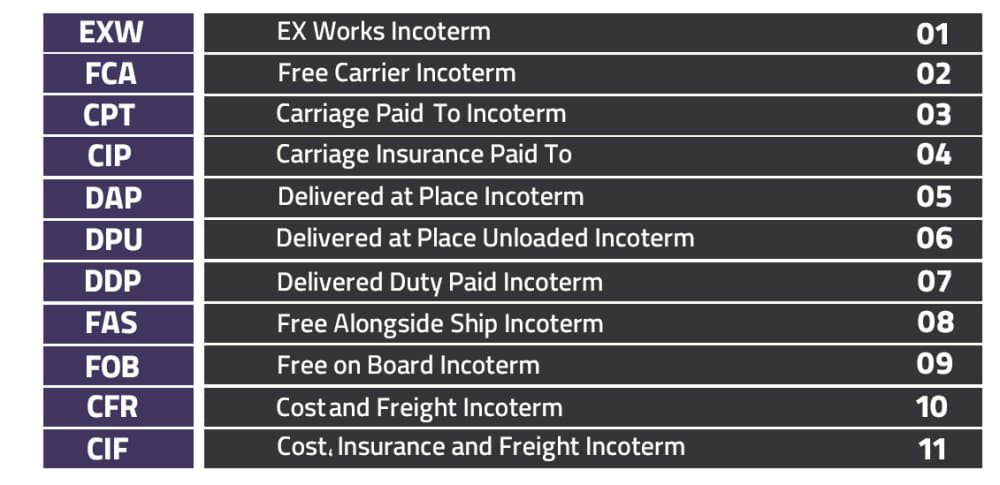
EXW (Ex Works)
EXW is suitable for buyers with well-established logistics network. Sellers only need to deliver at the factory and buyers are responsible for all transportation, insurance and customs clearance from the factory destination. For example, if you have your own logistics team or are familiar with the export process, choosing EXW can minimize costs, but you are responsible for the entire transportation process.
Let’s say a customer wants to purchase a shipment of jewelry from Yiwu, China and chooses the EXW terms. According to EXW, the supplier will prepare the goods and place them in the designated delivery area of the factory. The buyer needs to send a logistics company to pick up the goods at the factory in Yiwu and then take care of the transportation, including all the costs of sea freight, air freight, insurance and customs clearance.
This model is suitable for buyers with good logistics network, especially those companies who want to control costs, arrange their own transportation or have strong customs clearance. However, for inexperienced buyers, EXW may add a lot of extra workload and risk.
FOB (Freight on Board)
FOB is another commonly used trade term indicating that the seller is responsible for delivering the goods to a designated port of shipment (e.g., Ningbo, China) and loading them onto a ship. The seller is responsible for loading the goods onto the ship, after which the transportation costs and risks are borne by the buyer. If you prefer to choose your own freight forwarder, FOB gives you the flexibility to control the cost of later transportation.FOB is especially suitable for ocean freight products and for buyers who have some experience in transportation.
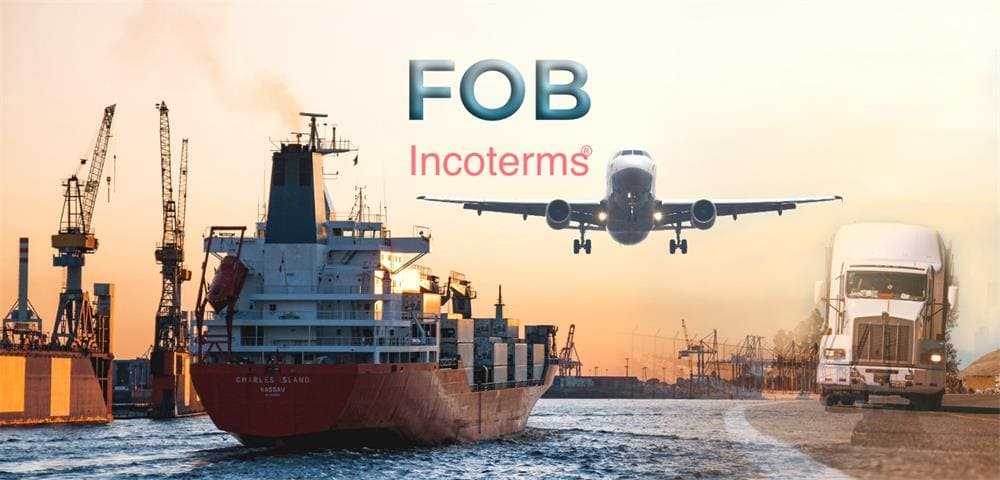
Suppose a customer intends to purchase a shipment of electronic products from Ningbo, China, and the parties have chosen FOB terms. The supplier is responsible for delivering the products to the port of Ningbo and loading them onto the ship, which means that they bear all the costs from the factory to the port, port loading and unloading, and so on. After the goods are loaded and pass the ship’s rail, the responsibility shifts to the buyer. At this point, the buyer will bear the cost of ocean freight, insurance, and the cost of customs clearance and transportation at the port of destination.
FOB terms are particularly suitable for buyers who have some knowledge of international logistics, or those companies that want their suppliers to handle the domestic transportation aspect. Under this model, the buyer can enjoy some of the logistics support arranged by the supplier, while having more autonomy and flexibility in the ocean transportation link.
CFR (Cost and Freight)
The CFR clause states that the seller is responsible for delivering the goods to the buyer’s designated port of destination and bears the cost of transportation, but is not responsible for insurance during transportation. In other words, the seller is responsible for transporting the goods to the buyer’s port, and ocean freight is included in the contract price, but once the goods are loaded on the ship, all risk passes to the buyer. If the buyer wishes to ensure the safety of the transportation, he needs to purchase his own insurance.
Suppose a customer purchases a shipment of apparel from Ningbo, China, with the port of destination being the port of Los Angeles, U.S.A. Both parties agree to use CFR terms. In this case, the supplier is responsible for arranging transportation of the goods from the factory to the port of Ningbo and pays the ocean freight from Ningbo to Los Angeles. However, once the goods are loaded onto and through the ship’s rail in Ningbo, the risk during transportation is borne by the buyer. Therefore, despite the fact that the supplier has already paid for the ocean freight, the buyer still needs to consider purchasing insurance for the shipment to ensure its safety during transportation.
CFR terms are particularly suited to buyers who want the seller to handle domestic transportation and ocean freight costs, but need to remain proactive about insurance issues. For products that need to be shipped across the ocean to the U.S., buyers can often mitigate possible transportation risks with additional insurance.
CIF (Cost, Insurance, and Freigh)
CIF is one of the commonly used international trade terms, indicating that the seller bears the cost of transportation and insurance of the goods to the destination port specified by the buyer. Under CIF terms, the seller is responsible for the freight charges for transportation to the port of destination and insures the goods in transit so that the buyer does not have to worry about this additional part. However, CIF only covers the pre-arrival risk, and the buyer is responsible for customs clearance and subsequent transportation at the port of destination.
Let’s assume that a customer is purchasing a shipment of machinery parts from China, destined for the port of Hamburg, Germany, and both parties agree to use CIF terms. In this case, the supplier is responsible for the transportation of the goods from China to the port of Hamburg and pays the ocean freight and insurance costs. This means that the supplier insures the risks during transportation and bears the entire cost until arrival in Hamburg.
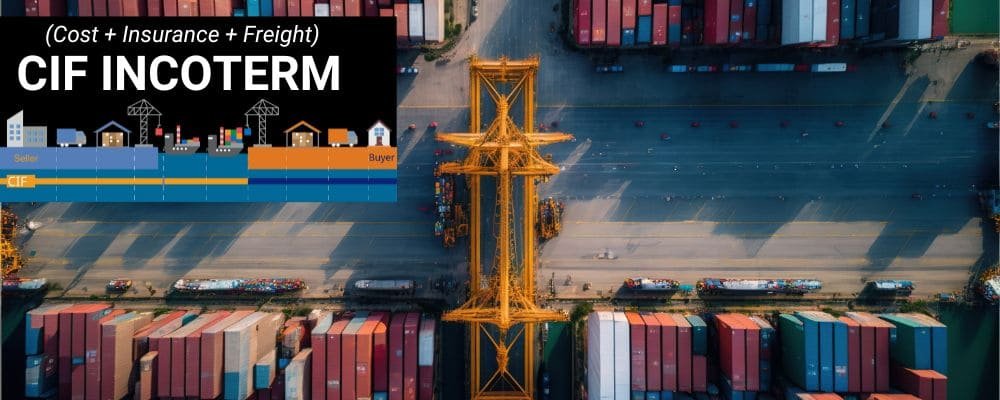
Once the goods arrive in Hamburg, the buyer begins to bear the remaining costs and risks, including customs clearance at the port of destination, miscellaneous port charges, and transportation costs from the port to the final destination.The CIF clause is suitable for buyers who want the seller to handle the transportation and insurance, and is particularly suitable for situations where cross-border transportation is required and the buyer does not want to add an additional insurance component.
DDP (Delivered Duty Paid)
DDP is an extremely convenient trade term, which means that the seller assumes all costs and risks from the exporting country to the buyer’s designated destination, including transportation, insurance, import duties and taxes, etc. The buyer only needs to pick up the goods at the final delivery point without having to worry about any transportation and customs clearance procedures. The buyer simply picks up the goods at the final delivery point and does not need to worry about any transportation and customs clearance procedures. Under this model, the seller bears the greatest burden, but it also provides the buyer with convenient “door-to-door” services.
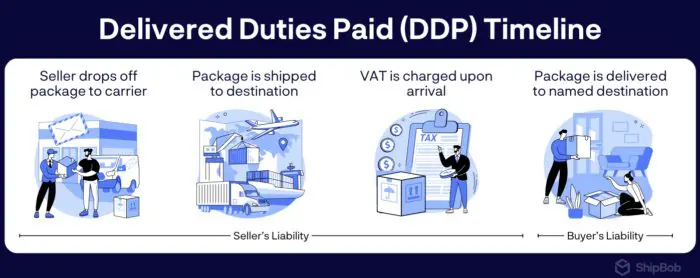
A customer purchased a shipment of electronic equipment from China, destined for London, UK, and both parties opted for DDP terms. In this case, the supplier is responsible for arranging the transportation and insurance from China to the UK, as well as undertaking all import duties, VAT and customs clearance procedures upon arrival in the UK. This means that when the goods arrive at the designated location in London, the customer only needs to accept and pick up the goods without additional customs clearance procedures or payment of taxes.
DDP terms are suitable for buyers who want to simplify the import process and avoid cumbersome customs clearance procedures, especially for companies or individuals with no international trade experience. For buyers who wish to pick up their goods seamlessly, DDP offers great convenience and predictability, but usually this also means that the cost of the goods will be higher, as all risks and charges are included in the price.
FCA (Free Carrier)
FCA is a trade term that indicates that the seller’s responsibility ends when the seller delivers the goods to the carrier at the designated place. The seller is responsible for delivering the goods to the designated place and completing the export clearance formalities, while the buyer bears all the risks and costs from that place, including transportation, insurance and customs clearance costs at the port of destination, etc. FCA is usually applicable to land or sea transportation modes, which are more flexible.
The client purchased a batch of home decorations from China, destined for New York, U.S.A. The parties opted for FCA terms. According to the FCA terms, the supplier delivers the products to the buyer’s designated carrier, such as a logistics company or freight forwarder. Assuming that the supplier chooses Shanghai as the place of delivery, the seller’s responsibility is to transport the goods to the port of Shanghai and complete the export customs clearance. After that, the goods are handed over to the buyer’s designated carrier for handling, and the buyer is responsible for arranging ocean transportation, insurance and customs clearance at the port of destination.
Under FCA terms, the buyer is free to choose the carrier, and usually this method is suitable for buyers who have their own logistic channels or want to control the transportation process. While the seller bears more of the upfront costs and risks, the buyer needs to bear larger costs from the point of delivery, including subsequent transportation and insurance. For buyers familiar with the international transportation process, FCA offers greater flexibility and control.
3.Tips for Communicating with Suppliers to Get Precise Quotes
When you need to get an accurate quote from a manufacturer or trader, the more details you provide about the product you want to order, the better. This includes specifications such as size, material, color, packaging preferences, and any other customizations you need. Being specific reduces the likelihood of a supplier making assumptions that could lead to an inaccurate quote.
Clearly specify the Incoterms (international trade terms) you will use, such as FOB, CIF or EXW. This ensures that both parties agree on who will bear the freight and customs charges and who will be responsible for insurance and risk during transportation.
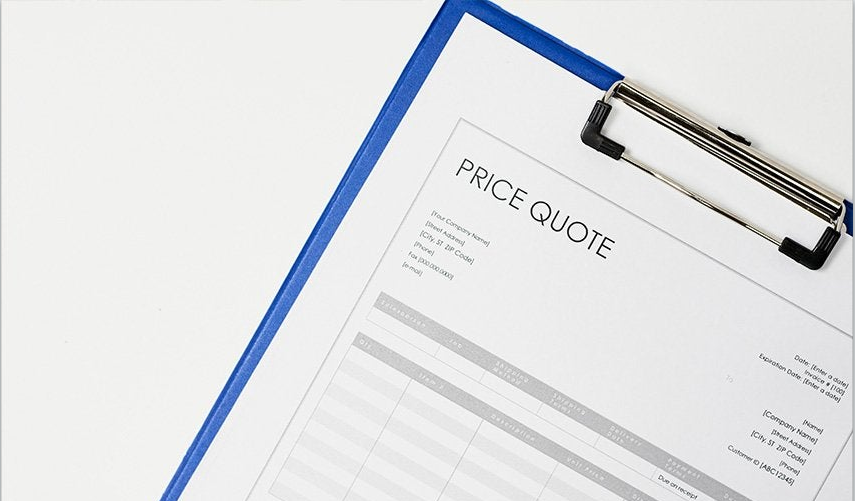
Ask for information about payment terms (e.g., deposit, full payment) and production or shipping lead times. Suppliers may offer discounts for early payment or bulk orders, so it is important to confirm these details in advance.
Most of the Chinese manufacturers or traders start from 1000 USD, if your starting price is more than 10000 USD, the supplier will offer some discounted price.
You plan to purchase a batch of customized backpacks from China with an MOQ of 1,000 pieces at a price of $15 each. However, if you can tell the supplier in advance that you may increase the purchase quantity in the future (e.g., by purchasing 5,000 pieces), the supplier may be willing to reduce the price to $12 per piece or offer an additional discount.
4.Confirm packaging and custom branding pricing before ordering
When making your next purchase order, confirm pricing for packaging and custom branding, if you have your own brand or if you intend to customize your product packaging. Clear communication at the outset will help avoid unexpected expenses.

You ask the supplier for the cost of customized packaging and brand logos, and the supplier gives a quote of $12 per product, but does not clearly list the design costs and printing costs. You can ask the supplier to list the costs in detail and confirm whether they offer free design support or discount programs.
5.Avoiding Common Mistakes That Lead to Inaccurate Quotes
If you intend to source products from China, your failure to provide detailed product specifications (e.g., dimensions, materials, functionality, etc.) when requesting a quote from a supplier results in the supplier providing a basic quote that does not take into account specific customization requirements. This may result in additional costs during the manufacturing process that are not reflected in your final quote.
You don’t clearly ask about shipping costs and delivery times, resulting in a quote, you find out that the shipping costs are much higher than expected and the delivery time is longer than originally planned. The supplier’s quote only includes the price of the product without detailing the transportation and packaging costs.
You need to clarify the payment terms with the supplier, such as whether you need to pay a deposit in advance or can pay in installments. What’s more, you need to confirm the trade terms (such as FOB or CIF), and both sides confirm the transportation cost and risk responsibility, which can provide to avoid unnecessary trouble and extra expenses.
6.Whether the final price is factory stock or new product
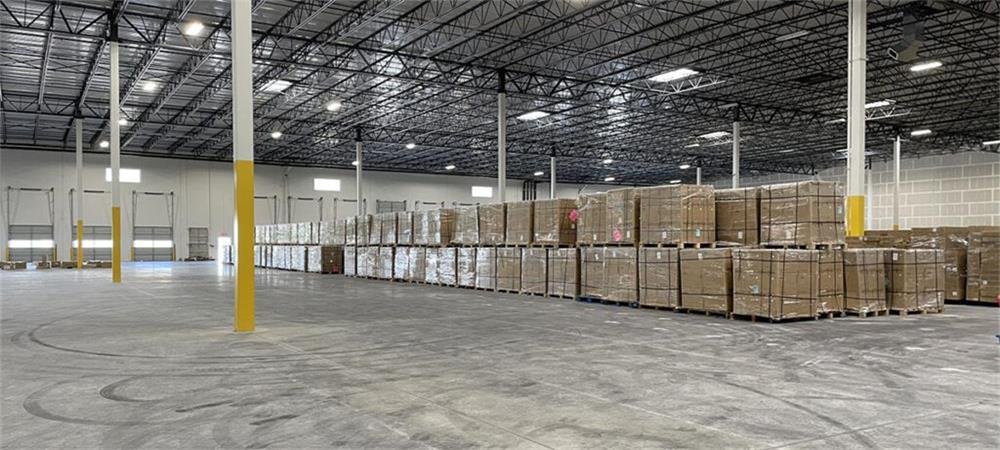
When negotiating with suppliers, find out if the final price of the product is for stock or newly generated products, which directly affects the cost of purchasing, delivery time, and product quality, among other things.
Understanding this price difference can help you make a more accurate budget assessment. Let’s say you ask a supplier or trader to customize a table and the supplier provides a quote of $100. If you don’t explicitly confirm whether that price is based on existing inventory or new production, you may find that when you decide to order, the supplier tells you that it needs to be remanufactured, in which case the price may go up, possibly to $120, due to the fact that there are more man-hours and material costs involved in the production of a new product.
If you need to control purchasing costs, prioritizing in-stock items and negotiating prices with suppliers may result in more discounts and offers. For new products, you may be able to secure better pricing terms by increasing order quantities, or lower unit prices through long-term cooperative agreements.
Ultimate
I hope this article on trade terms has helped you avoid some problems when getting quotes. If you still have questions or a better way to approach this topic, please let me know by leaving a comment below.
Goodcan is a professional agent purchasing company in Yiwu, if you need the best service and offer the most competitive price, please contact us!
